SHS Fall 2023 Promotions and Tenure


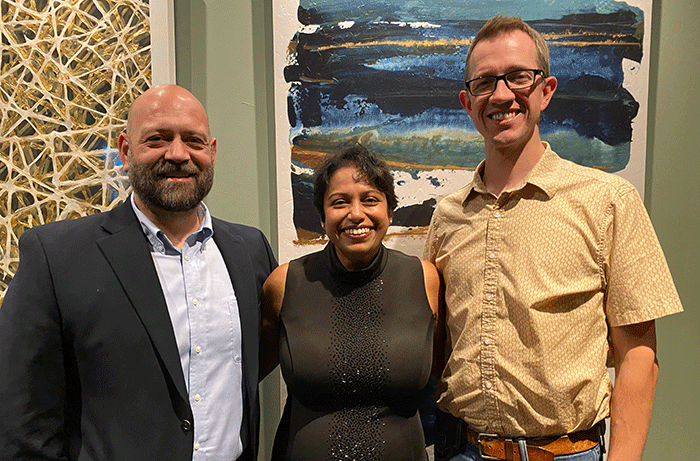
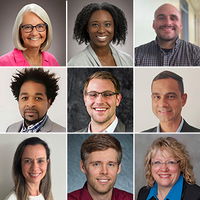
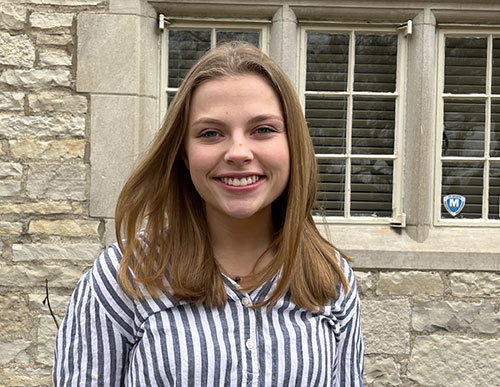
Raksha Mudar

Raksha Mudar, who joined the faculty of the Department of Speech and Hearing Science in 2011, was promoted to full professor in 2023. Mudar, who earned her Ph.D. from the University of Texas at Dallas, is the director of the Aging and Neurocognition Lab. 

Mudar investigates the effects of normal cognitive aging and brain diseases including mild cognitive impairment, Alzheimer’s disease and frontotemporal dementia on higher order semantic functions. She uses a combination of behavioral methods, event-related potentials and functional magnetic resonance imaging in her research.

“I am deeply honored to be promoted to full professor at such an esteemed institution of higher education and research,” Mudar said. “My path to full has been very rewarding. I chose academia because both research and teaching bring so much joy to me. Looking back, I know I chose right, and am excited for what lies ahead.”

Mudar was elected as a fellow of the American Speech-Language-Hearing Association at the ASHA Convention 2022—one of the highest forms of recognition given by ASHA. Mudar has been involved in several federally funded grants and is currently the primary investigator on an R01 titled “Digital Technology to Support Adherence to Hypertension Medications for Older Adults with Mild Cognitive Impairment.”

Brian Monson

Brian Monson, who joined the faculty of the Department of Speech and Hearing Science in 2017, was promoted to associate professor in 2023. Monson, who received his Ph.D. from the University of Arizona, is the director of the Auditory Neuro Experience Lab. His field of research is in auditory neuroscience. 

Monson holds degrees in electrical engineering, acoustics and speech/language/hearing science, with further specialization in neuroscience and music. With this background, he takes an interdisciplinary approach to auditory research, interfacing with clinicians, scientists, engineers and musicians. His research interests center around auditory neurodevelopment and speech/voice perception.

Monson is the principal investigator on an R01 grant from NIH-NIDCD for his project titled, “The ecological significance of extended high-frequency hearing in humans,” and the PI on an R21 from the NIH-NIDCD as well as the co-PI on another R21.

“I’m quite honored to become a tenured faculty member at such a reputable institution as the University of Illinois,” Monson said. “I very much look forward to continuing to serve our students and our community with my colleagues in Speech and Hearing Science and in Applied Health Sciences.”

Pasquale Bottalico

Pasquale Bottalico, who joined the faculty of the Department of Speech and Hearing Science in 2017, was promoted to associate professor in 2023. Bottalico earned his bachelor’s degree in telecommunications engineering from Univeristà Mediterranea di Reggio Calabria (Italy), while simultaneously pursuing a degree in opera singing at the F. Cilea Music Academy of Reggio Calabria (Italy). 

In 2005, he moved to Turin where he earned his master’s degree in telecommunications engineering from Politecnico di Torino (Italy). Bottalico earned his Ph.D. in metrology, studying acoustics with particular attention to the uncertainty of measurements and statistical analysis of data. Bottalico is particularly interested in the professional voice user and singer techniques, as well as the definition and the quantification of vocal load. Other fields he is interested in are speech intelligibility, room acoustics and musical acoustics.

Bottalico is also a professional chorister, having performed under such prestigious directors as Rafael Frühbeck De Burgos, Yuri Ahronovitch, Jeffrey Tate, Juanio Mena, Gianandrea Noseda, Ottavio Dantone, Wayne Marshall, Helmuth Rilling, Christopher Hogwood, Robert King and Ivor Bolton.

“Attaining tenure and rising to the role of associate professor is a profound validation of my dedication to enlightening minds, pushing the boundaries of knowledge and contributing to the ever-evolving academic landscape,” Bottalico said. “It signifies not just personal achievement but the faith others place in my ability to continually inspire students and illuminate the paths of intellectual exploration.”

Share on social
Related news

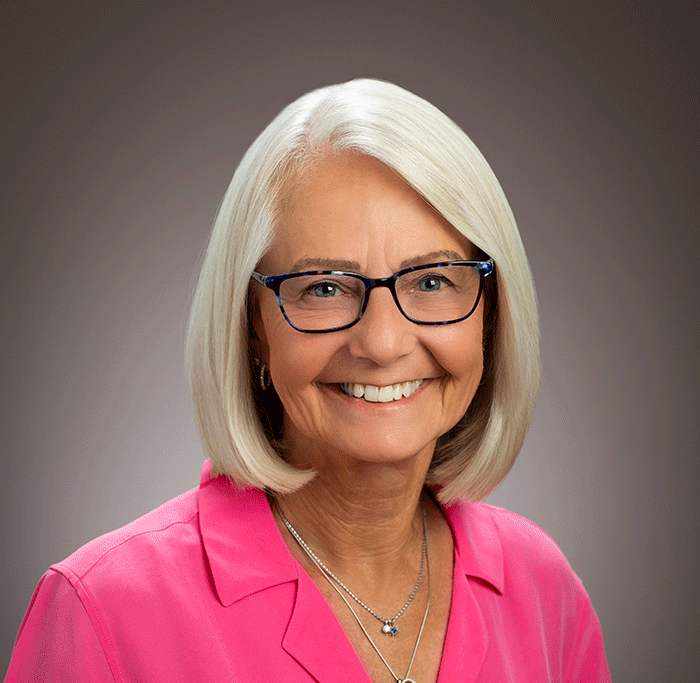
Healthcare mission drove Lynne Barnes to MHA program


‘I’ll give them everything I’ve got,’ Lynne Barnes said about her new job.

A year of retirement felt like enough for Lynne Barnes, the longtime healthcare administrator.

After finishing her four-decade career at Carle Foundation Hospital as president, Barnes soon found herself auditioning for her newest challenge: directing the Master of Health Administration degree program in the College of Applied Health Sciences at the University of Illinois.

It was the third interview she’d ever taken, after her first Carle interview and her high school gig at the pastry chain Mister Donut.

Today, at 70, Barnes has “lots of energy, that’s a blessing,” she said. “I was ready to do something different.”

As the newest director of the six-year-old MHA program, Barnes brings an invaluable trove of administrative experience she hopes to impart to future healthcare leaders.

Barnes’s appointment officially began Aug. 1 when she succeeded two-year interim director Laura Rice.

“I’ll give them everything I’ve got, in terms of investing the program and helping it to grow in the ways that the university wants to see it grow,” Barnes said. “I want to see this program rise in the ranks of status.”

Raised in Catlin, Ill., Barnes was hired by Carle Health in January 1977 straight out of college as the system’s first occupational therapist. She went on to direct several departments and held numerous administrative roles before finishing her Carle career as president of the Urbana hospital.

“Throughout her career, Lynne has served the community and distinguished herself as a leader in healthcare innovation,” said Kim Graber, head of the Department of Kinesiology and Community Health. “Her background in clinical operations and occupational therapy, along with her distinguished experience as president of Carle Foundation Hospital, will provide graduate students in health administration with unrivaled leadership.

“Lynne has boundless energy and will help take our program to the next level.”

Barnes will continue to teach as a part-time clinical professor, a role she’s held at University of Illinois Urbana-Champaign since 2007. A frequent community volunteer, Barnes is board chair of the Stephens Family YMCA and Experience Champaign-Urbana, and previously served as a member of the United Way of Champaign County and Urbana City Council.

Barnes oversaw the growth of Carle Foundation Hospital’s therapy programs and clinical operations, leading the flagship location in the face of the COVID-19 pandemic before retiring in February, 2022.

“Everything I’ve done there is such a joy,” Barnes said. “I love healthcare, because all the time we’re just serving people, and serving people who are in a vulnerable situation.

“Nobody wants to have to go to the hospital. And I love the opportunity to serve people in that way and make that experience as palatable and positive as it can be under their circumstances. That is a joy.”

Barnes earned her bachelor’s degree in the emerging field of Occupational Therapy from the University of Illinois-Chicago in 1976, later obtaining her master’s degree in public administration from UIUC in 1988.

The MHA program was established in 2017 and accredited by the Council on Education for Public Health in 2019.

The opportunity to educate the next generation of healthcare leaders compelled Barnes to take the MHA directorship. She will work to develop the department’s new online MHA program and strengthen its position in the graduate landscape.

“The support has been terrific,” Barnes said. “I have no doubt we will be able to achieve these goals. I enjoy teamwork and I have already experienced that it is ‘all hands-on deck’ to continue to improve and optimize our educational opportunities for our students.

“After decades of working in healthcare, it’s really exciting for me to have the opportunity to impact the careers of future healthcare leaders.”

A gutsy start

Growing up the youngest of three, 30 miles east of the University of Illinois campus, Barnes said attending the U. of I. was basically inevitable.

Interested in taking a hands-on role within healthcare, Barnes enrolled in the new Occupational Therapy degree program, which sought to train physicians who could help patients with physical and sensory problems to regain their independence.

The program was run through the University of Illinois-Chicago, but the 10-student cohort studied on the Urbana-Champaign campus.

Upon graduating, Carle Hospital put out an ad for its first occupational therapist position. Half of Barnes’ class applied for the job, she said.

“The [physical therapy] director had a hard time figuring out who to hire,” Barnes said. “And he laid our resumes out on the table at home and his wife—who was the emergency department director at Carle—said, ‘Well, just pick the one that had the highest grade-point average.

“And I got the job.”

Barnes hit the ground running in Carle’s relatively small therapy department, back when the hospital only had about 150 beds.

I remember thinking, ‘I love this, I want to be a part of it.’ I’ve always had the desire to lead and share the enthusiasm and passion I have for whatever it is I’m doing. And I had that opportunity at Carle.”

Soon, her success led to a promising offer: work on her Ph.D. while teaching future occupational therapists on the UIC campus.

But Barnes went straight to administration and leveraged a proposal of her own. If she were to get a promotion, she’d grow her own occupational therapy department and stay at Carle Foundation. It worked.

“I was kind of gutsy, I had only been there a couple years,” she said.

Barnes quickly found an affinity for the business side of healthcare, growing the therapy department by about 60 employees before being promoted to Carle’s director of therapy.

Soon, the current CEO of Carle Healthcare, Jim Leonard, came to her office and asked if she’d like to be a vice president of the hospital.

“I was all about therapy, I was very focused on what I did,” she said. “But whether I could translate my leadership skills to other departments was unknown. They thought maybe I could, but they were taking a chance on me.”

The decision led to years of multifaceted administrative work for the Urbana hospital, while the system continued its growth trajectory, adding a handful of new hospitals across Illinois.

Barnes’ attention stayed fixed on Carle Foundation, where she took pride in handling complaints from patients and families in vulnerable situations.

“To me, a patient who’s had a complaint and had it successfully resolved is more loyal than a patient who’s never even had a problem. I’m competitive, and I like to win back people,” Barnes said.

“I love the atmosphere and culture of Carle, of always striving to fix things and make it better and push ourselves so we could be noted for having the best care around.”

Mission-driven healthcare leaders

While still at Carle, Barnes found a new passion bubbling up alongside her administrative duties. She took joy in passing on her knowledge to both peers and students.

Along with becoming teaching faculty at the College of AHS, she’s become a professional life coach, dispensing career advice for those inside her field and outside of it.

For the present and future students of the MHA program, Barnes wants to pass on the idea of healthcare as a mission-driven calling, not just a job.

“They’ve got to learn facts about what it’s like to run a healthcare system, but they also need what I would call the characteristics that make the kind of healthcare leader that you want. I try to blend them, and share with them the need for energy, for enthusiasm, the need for passion,” Barnes said.

With MHA embarking on the brand-new construction of an online degree, and the spotlight on healthcare after the COVID-19 pandemic, Barnes has high-minded goals for the future of the program.

“By the time I’m done, my goal is this place will be more well known and people will be clamoring to get their graduate degree from the University of Illinois Urbana-Champaign MHA program,” she said.

“That’s going to take work and it’s going to take connectivity, so I’m hoping I can use some of my healthcare connections to be able to get the word out.”

Editor’s note:

To reach Ethan Simmons, email ecsimmon@illinois.edu.
 

Share on social

Related news

SHS’ Rispoli retired from academia, but not done educating


It really should not surprise anyone that someone who grew up in Brooklyn, N.Y., had an interest in languages. After all, Brooklynese is its own special code, spoken by millions.

So, the fact that Matt Rispoli—Illinois professor by way of Marine Park (a neighborhood way at the south end of Flatbush Avenue and home of Nathan’s, Coney Island and Buddy’s Fairyland)—ended up as an academic researcher whose expertise is developmental psycholinguistics makes perfect sense.

Rispoli—who recently retired after four decades in academia—credited his teachers, starting with Judith Marcus, his Spanish teacher at Madison High, and primarily his professors at Hunter College in New York, for influencing his interest in linguistics.

“When I got to Hunter, they had a bunch of great teachers, and I remember them really well,” he said in an accent that gives away his birthplace. “A guy named Robert White, (and also) Tamara Green. They taught Greek and Latin. Best of all was Ralph Ward. The stuff he knew was incredible. I’m lucky I got a chance to study with the guy.

“Those were my influences. Their enthusiasm for language inspired me.”

After graduating from Hunter, Rispoli got his master’s degree in Library Science at Queens College and worked as a librarian for four years in New York, including at the Brooklyn Public Library from 1978-79. 

But his love for language kept calling and he answered, receiving a master’s degree in linguistics at Penn. He followed with a Ph.D. in developmental and educational psychology at Teachers College at Columbia University in New York, and then embarked on an academic career that wound from Cal-Berkeley through the Midwest—the University of Kansas, where he met future wife Pamela Hadley, now the department head of the Department of Speech and Hearing Science at Illinois—to Oklahoma State, Northern Arizona and Arizona State.

Family reasons brought Rispoli and Hadley to Northern Illinois in 1999, and it wasn’t long before the couple/colleagues ended up in Urbana-Champaign.

“It was only a matter of time before someone at Illinois noticed my wife’s career and said, ‘Gee, we’d love for you to come down here,” said Rispoli, who joined the SHS faculty in 2007 as a visiting assistant professor and became an associate professor in 2017.

“I was delighted to move down to a campus where they actually have a linguistics department and great psychology department, but most of all, a department where we get the brightest kids in the state.” 

Hadley and Rispoli have collaborated on dozens of projects and publications and Rispoli enjoyed the work, but at the end of 2022, he felt it was time to step away.

“I’m 70,” he said when asked why he retired. 

But he had no desire to sit on his couch all day or go play golf.

“After you retire you begin to say, ‘What can I give back?’ I have the time. I have the passion.”

With that time and passion, Rispoli expanded on the Sentence-Focused Framework project created by him and Hadley. The pair developed the Sentence-Focused Framework to build a bridge between early vocabulary and grammar interventions for toddlers and preschoolers with language disorders.

The Sentence-Focused Framework is an approach to language intervention that helps toddlers produce more diverse simple sentences, Rispoli said. 

“Then in retirement, I learned how to animate and create films,” he said. “Now I can actually give expression to these ideas, visualizations that I had while I was lecturing that never came through.”

Rispoli developed a YouTube channel also called the Sentence-Focused Framework, uploading a series of 24 videos that explore language, language development and language intervention. The intended audience is students of language development, parents of young children and professionals involved in early intervention. Rispoli encourages instructors to use the videos in class. 

“It (the YouTube channel) really comes off of my experiences teaching (SHS 320) which is language development. In 320, we couldn’t really be sure of the student’s background and how much they understood or knew. We knew we needed to augment. But I never had enough time as an instructor to augment, to really build up the teaching materials

Rispoli sees Sentence-Focused Framework as addition to the college curriculum, and has just finished a website that houses the videos and other tools.

Whatever the future for that project, it’s clear retirement hasn’t slowed Rispoli, who sees it as just another phase of life.

“First chapter I was a librarian,” he said with a laugh. “Second chapter I was a Ph.D. Third chapter I’m an educator of sorts. … who really speaks Adobe Premiere.”

Editor’s note:

To reach Vince Lara-Cinisomo, email vinlara@illinois.edu.
 

Share on social

Related news

‘What Did You Say?’ Understanding speech in noise a common problem


A common complaint that audiologists hear from clients coming in for hearing assessments is difficulty hearing in noisy backgrounds. It’s a problem that affects millions of adults and can become more of a problem with age, but it also affects children and adolescents as well.

While the problem might be common, adequate ways of addressing the problem are not. Effective solutions require a deep understanding of the reasons the problem is occurring. Three faculty in the Department of Speech and Hearing Science—Assistant Professor Mary Flaherty, Associate Professor Dan Fogerty and Assistant Professor Ian Mertes—focus their research in this area with the goal of gaining that deep understanding and finding solutions in order to improve the quality of life of those who struggle with understanding speech in noise.

“If people are unable to hear clearly in noisy environments such as restaurants, it can negatively impact their ability to socialize and communicate in those settings and, ultimately, to enjoy those settings,” Mertes said.

Mechanics are There; Understanding is Not

While some might assume that hearing in noise is a problem of aging, it turns out that children can also have difficulty understanding speech in noisy environments. It’s known that children with normal hearing have fully developed auditory systems by their first birthday, but that their brains take longer—into their teenage years—to develop the ability to process speech in noise effectively. What isn’t known is why this is. That’s what Mary Flaherty wants to find out.

“We know it has something to do with attention and sound-source segregation, separating different sounds in the environment,” she said. “We also know children just need more information than adults. They aren’t as good as adults at putting puzzles together when they are missing pieces. But we don’t really understand what it is that children need to help them.” 

Flaherty’s concern is that children who struggle with understanding speech in complex acoustic environments may fall behind in school. Moreover, the true problem may go undiagnosed and the child labeled negatively by teachers and classmates. And if this is true of children with normal hearing, imagine the extra burden faced by children with hearing loss who experience greater difficulty understanding speech in noise.

Adults use cues such as voice pitch to focus on one speaker in noise and ignore everyone else. Children cannot do that. So what cues can help children? Flaherty currently is investigating talker familiarity. She worked with a graduate student in audiology to develop a game that familiarizes children with a voice while they’re playing. A pilot study in which children played the game 10 minutes a day for five days found that their speech-in-noise perception for that particular voice increased. Flaherty plans to pursue research that tests this phenomenon in the classroom.

This summer, she will collaborate with researchers at Lurie Children’s Hospital of Chicago to investigate hearing-in-noise difficulties faced by children who use hearing aids. Among the issues she will investigate is whether talker familiarity also can help children with hearing loss, which has never before been studied. As she continues her research efforts, Flaherty hopes to identify primary factors that account for the long trajectory of children’s development of speech-in-noise perception, and to use the knowledge to improve hearing in noise, especially for clinical populations. She also collaborates with SHS colleague Pasquale Bottalico on classroom studies that they hope will lead to a method of predicting which children may have difficulty understanding speech in noise, identifying characteristics that they have in common, and recommending effective interventions.

More Cues, but More Potential Deficits with Age

Dan Fogerty focuses on older adults in his studies of how noise interferes with speech processing, how it impacts understanding a message and how it requires listeners to recruit other cognitive and sensory processes to help make sense of it.

A predominant perspective on how noise makes speech understanding difficult is that it exerts two primary effects: energetic masking and informational masking.

“In energetic masking, the noise covers up the speech energy in time and frequency,” Fogerty said. “Informational masking refers to all of the other things that might make it difficult, such as the message or familiarity of a competing talker that can draw your attention.”

Sometimes the noise dominates the signal received by the brain, depriving the listener of information. Speech dominates the signal at other times, and from these glimpses of information, listeners can piece together an interpretation of what is being said. Fogerty’s research uses glimpsing theory to examine what cues are available to the listener at any given time, but also extends the theory to how speech information changes over time.

“Amplitude modulation, the temporal rhythm of speech, is critical for understanding speech,” he said. “We’re finding that if the competing sounds vary similarly to the rhythmic aspects of speech, it can make speech understanding difficult. If we separate out these properties so that noise is varying at a faster or slower rate, then people are better able to glimpse or extract information.”

Fogerty’s primary research populations are individuals who have mild or moderate hearing loss as well as individuals who are aging with the typical sensory and cognitive changes that occur but without dementia or significant cognitive decline. He also tests college-age individuals so that effects related to aging or hearing loss are clearer. One thing he notes is important to remember is that being older doesn’t always mean performing more poorly on speech understanding tasks.

“We have a lot of older adults who do just as well or better than college students on some tasks,” he said. “That’s important for us because we want to know what is preserving their ability to understand speech in noise. What strategies are they using that are particularly helpful?”

His research goals are to contribute to the design of better hearing devices, but also to address issues that might not have a technology solution.

“That’s why we’re so interested in finding out what the abilities are that people bring to the task of listening in noise, and whether certain skills can be sharpened through training,” he said.

The Physiology Behind it All

From animal and human studies, we know that when sound enters the ear, the brain has the ability to fine tune the sound by controlling how the middle and inner ear responds. Animal studies have shown that these responses can help encode sounds in background noise. 

Ian Mertes is studying these top-down mechanisms in young adults with normal hearing to determine if they also help humans understand speech in noise. Both mechanisms rely on the brain stem. One mechanism contracts a muscle, which pulls on a bone of the middle ear, affecting how noise is transmitted through the auditory system. It can reduce the noise. The brain stem also can change how the inner ear amplifies sound, which also can turn down noise. 

“I’m looking at how these two mechanisms, which are reflexes, work together,” Mertes said. “They may work at different frequency regions, the lower frequencies or pitches and the middle frequencies or pitches. Working together, they may help people hear in background noise.”

Using otoacoustic emissions, a clinical audiology test of inner ear function, his studies have shown the physiological mechanisms are correlated with the ability to understand speech in noise. But, he said, it’s complicated.

“It can depend on how we do the physiological measurement, the types of sounds we present to the ears, and the speech perception task,” he said. His current focus on individuals without hearing problems gives him the “best look” at normally functioning auditory systems. “They have the most robust physiological responses and are able to participate in the perceptual tasks, and that can help me create a good template for adapting those measurements when I extend my work to clinical populations.”

Working with Vanderbilt University colleague Ben Hornsby, an associate professor of hearing and speech sciences, Mertes also plans to add another auditory concept called listening effort to the physiological picture of understanding speech in noise. Do individuals with weak top-down reflexes have to put more effort into completing speech perception tasks? What are the consequences of this additional effort?

The in-depth knowledge Mertes is gaining through his research may help explain why some young adults with clinically normal hearing report having difficulty hearing in background noise, another area of interest to him.

Summing up what he hopes will be the outcome of his research program, he said, “I’d ultimately like to make a significant contribution to treatment—strengthening auditory reflexes or simulating them in devices, increasing understanding of messages while reducing the effort it takes to reach that understanding.”

Share on social

Related news

SHS’ Nudelman takes Research Live prize


Now in its eighth year, Research Live! is a fun, fast-paced competition that celebrates graduate student research at the University of Illinois. Twelve finalists shared their passions in three minutes or less at the Knight Auditorium at the Spurlock Museum on April 6. 

The winners are: 
The Visionary Award: $200
Yaman Yu, Information Science, “How do Internet Users from Bangladesh and India Deal with Targeted Ads on Social Media?”

The Storyteller Award: $200
Joe Mirabelli, Educational Psychology, “How Ecological Perspectives Can Help Address Graduate Student Stress”

The Impact Award: $200
Ricky Price, Special Education, “Why Work Matters”

The Design Award: $200
Erick Hernandez Alvarez, Materials Science and Engineering, “How much is a color worth? Quantum dots can tell you!”

The People’s Choice Award: $200
Abdulgafar Sulaiman, Civil Engineering, “Be Asphalt, My Friend!”

The Grand Prize: $500
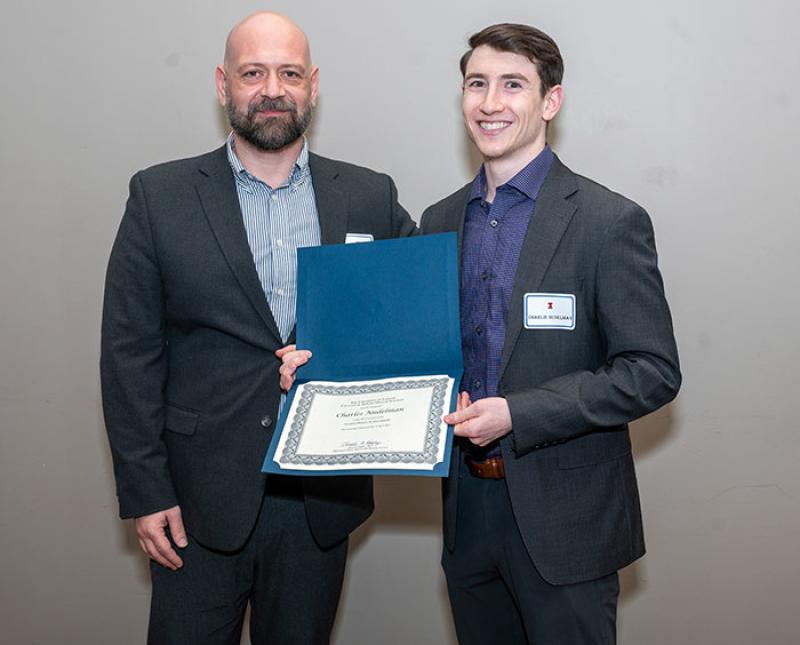
Charles Nudelman, Speech and Hearing Science, “Preventing Vocal Injuries in Teachers Using Voice Acoustic Biomarkers and Immersive Virtual Reality”

Share on social

Related news

2023 SHS Awards


Share on social

Related news

New KCH faculty members study biomechanics of shoulder pain


According to an article published in 2020 in Clinical Rehabilitation, up to 71 percent of manual wheelchair users report that they have experienced shoulder pain at some point in their lives. There is no question that manual wheelchair propulsion puts stress on the upper extremities. But if the pain is related only to the repetitive motion of wheelchair propulsion or overuse, why don’t all manual wheelchair users experience shoulder pain? Why are adults who began using a wheelchair in adulthood more likely to experience pain than adults who began using a wheelchair in childhood, despite significantly fewer years of wheelchair use? Why do female wheelchair users experience shoulder pain at twice the rate and intensity of males? What are the most effective ways of treating shoulder pain? What role does physical activity play in reducing pain and pathology?

These are some of the questions two of the newest scholars in the Department of Kinesiology and Community Health hope to answer through their research. Assistant Professors Matt Hanks and Josh Leonardis joined KCH last fall. Both had just completed post-doctoral research fellowships at the University of Wisconsin-Milwaukee in the Department of Rehabilitation Sciences and Technology. 

The Biomechanics of Shoulder Pain

As a doctoral student in kinesiology at the University of Michigan who focused on shoulder biomechanics and neuromuscular control, Leonardis had been investigating shoulder morbidities in breast cancer survivors. Treatments for breast cancer are highly invasive to the shoulder joint complex and upper extremity musculature. “There are a lot of downstream effects that are underappreciated because the focus is on beating breast cancer,” he said. “As breast cancer becomes an increasingly survivable disease, the focus needs to shift to what life is like after the fact.” A small percentage of biomechanics literature focuses on the shoulder, he added, because it’s difficult to study. 

When he began looking for a post-doctoral position, he wanted to study shoulder biomechanics in a new population in which pain and pathology were ongoing secondary problems. He chose to complete a post-doctoral fellowship in rehabilitation engineering in the Mobility Lab at the University of Wisconsin-Milwaukee, where studies of wheelchair propulsion biomechanics and shoulder pain and pathology in pediatric and adult populations were underway.

“It felt as though I was given the opportunity to contribute toward improving the quality of life of a couple of different populations, and that was important to me.” Leonardis said.

He describes his general research interest as the adaptability of the neuromusculoskeletal system. One question he will pursue is whether the absence of shoulder pain in some wheelchair users with pediatric-onset disabilities and the presence of pain in others is related to adaptations to the neuromuscular and musculoskeletal systems that occur during the transition from childhood to adulthood, a period between the ages of 8 and 21 when bodies grow and change tremendously. He currently is investigating the possibility of sex-specific adaptations during this period that might contribute to females experiencing pain more frequently and more intensely than males. Similarly, he also believes adaptation might explain why pain is more common in people who begin using wheelchairs as adults when compared to adults who began using wheelchairs as children and adolescents.

The Role of Physical Activity

Matt Hanks, who completed his Ph.D. in Kinesiology at Auburn University, had been investigating the biomechanics of sports-related movement, primarily overhead throwing, in adapted and traditional sport athletes. Working as an athletic trainer with wheelchair athletes sparked his interest in understanding the shoulder biomechanics of manual wheelchair users during activities of daily living and in sport and their association with the development of shoulder pain and pathology. He pursued this during his post-doctoral experience in Milwaukee by investigating shoulder biomechanics during wheelchair propulsion and adapted sport among children and adults with spinal cord injuries. His particular focus is on the potential effects of physical activity to mitigate shoulder pain and pathology in manual wheelchair users by examining changes in shoulder musculoskeletal development and biomechanics as a result of engaging in physical activity during childhood and early adulthood.

“Manual wheelchair users, particularly children and young adults, are populations that are largely understudied in the physical activity realm,” he said. “Of the research that does exist, there is not a clear consensus on the benefits and drawbacks of physical activity. Is it helpful or hurtful? How much makes a difference? How much is too much? When should it begin? A lot of the broad questions remain to be answered.”

Hanks believes children and adults perceive physical activity differently, which can impact motivation and adherence to physical activity. Children are typically motivated by the opportunity to play, have fun, and interact with others socially. Adults often are more motivated by aesthetics and health. They want to look or feel better, or their doctor has encouraged them to be more active. Using a manual wheelchair can certainly make engaging in physical activity more complicated.

“Now you introduce the obstacles of accessibility, the need for adapted equipment and facilities, and adapted educators—people who understand you and are qualified to give you sound advice based on research,” Hanks said.

Both Hanks and Leonardis observe that the biomechanical study of manual wheelchair users is relatively young. As techniques and technology evolve, they said, the means for identifying factors that go into shoulder pain and pathologies as well as effective interventions get better and better. They will pursue answers to their various research questions individually and in collaboration. Hanks is the director of the Disability and Movement Biomechanics Laboratory. His team’s multimodal approach to investigating the role of physical activity on shoulder health in manual wheelchair users utilizes motion analysis and biomechanical modeling, diagnostic and quantitative imaging, and upper extremity strength testing. Leonardis directs the Musculoskeletal Morphology and Biomechanics Laboratory, where he and his team investigate the intimate relationship between musculoskeletal structure and function using traditional biomechanical technologies, computational evaluations of neuromuscular control, and quantitative musculoskeletal imaging techniques. They also co-direct the Movement Analysis Laboratory, a state-of-the-art space equipped for the biomechanical evaluation of various populations across the lifespan. 

Share on social

Related news

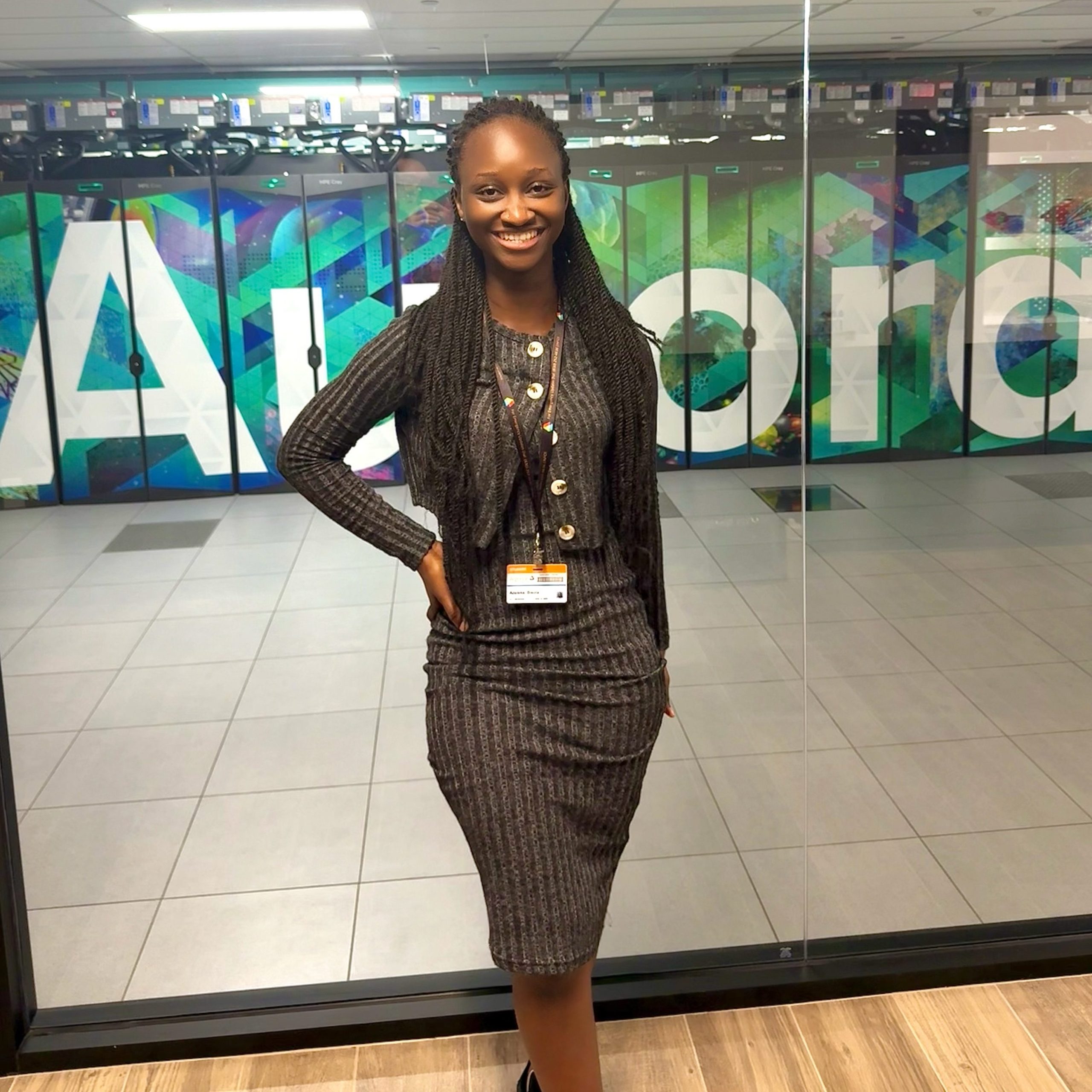
SHS undergrad Panfil scores prestigious internship


Holly Panfil knew from a young age that she wanted to support people with disabilities. As she grew up, her passion also grew, and she got involved with organizations that provided her opportunities to work with people who have intellectual or developmental disabilities.

“I had opportunities such as Big Brothers-Big Sisters, where I formed connections with children who communicate nonverbally, and observed their frustrations of not being able to articulate their thoughts,” Panfil said.

Panfil was also part of a Youth Activation Committee, which pairs children with and without intellectual disabilities to teach them how to advocate for the respect, inclusion and
acceptance of all people, regardless of abilities.

“That is what got me started and what made me really passionate about inclusion,” said Panfil, a junior in the Department of Speech and Hearing Science in the College of Applied Health Sciences at the University of Illinois.

In fact, Panfil wanted to be a special education teacher, but her career path took a turn when, as a high school senior, she shadowed a speech pathologist.

“Once I found out there was a career that could work on communication skills and improve those, especially for people that use AAC (Augmentative and Alternative Communication) devices, I just thought that was really cool and something I wanted to pursue,” she said. “Through observing her, it really just didn’t take long for me to realize that this was the career for me.”

And as Panfil pursues a career in speech language pathology, part of her journey includes her plans for the summer. Panfil this winter earned a Fulbright Canada-Mitacs Globalink internship, allowing her to travel to Chicoutimi in Quebec after the spring semester ends. An experience Panfil had last summer led her to apply for the Fulbright.

“Last summer, I worked at an Easterseals camp called Rocky Mountain Village in Colorado,” she said. “It’s a camp for kids and adults with different kinds of intellectual, developmental, or physical disabilities. One week I got to work with a camper who’s 17 and has cerebral palsy and uses an AAC device. I really got to see the issues with AAC devices and her skipping out on parts of conversations because she couldn’t communicate as fast as she wanted to. Just seeing her frustration with that was hard.”

Panfil scanned the Fulbright listings, not expecting to see anything related to speech and hearing science, she said, adding that most research opportunities “seem to be for engineers and computer science majors.”

This time, she was happily surprised. She saw a listing to work with Dr. Julie Bouchard from the University of Quebec at Chicoutimi on the “voice output communication aid uses in the workplace” project.

“Once I saw that there was a project that related to improving AAC devices, I was pretty set on applying,” Panfil said.

With encouragement from her mentor, Dr. Raksha Mudar of SHS, Panfil applied and got the coveted internship. She leaves for Canada in May and will spend the summer working with Bouchard.

“The goal of the project is to learn how VOCA (voice output communication aid) users communicate in the workplace and discover strategies to improve those conversations with coworkers. I will be focused on transcribing and cleaning audio data of VOCA users to prepare it for analysis,” she said.

While Panfil is focused on her work this summer, she is also making plans for the future.

“My plan is to get my master’s in speech language pathology. And I’ve been in the process of researching different programs and trying to narrow down my list … and yes, (Illinois) is on the list, she said. “My time in Dr. Mudar’s lab has made me consider getting a Ph.D. to pursue a career in research. That wasn’t my plan coming into college. I’m hoping that this summer will maybe offer some clarity on that idea.”
 

Editor’s note:

To reach Vince Lara-Cinisomo, email vinlara@illinois.edu.
 

Share on social

Related news

AHS Staging Site
110 Huff Hall
1206 South 4th Street
Champaign, IL 61820
(217) 333-2131